• Home
  • About
Follow

MISSION CONTROL TEAM

Mar05
2012
Written by admin

FELIX BAUMGARTNER: Pilot

- First to complete freefall flight across English Channel using a carbon wing
- Set world records for highest and lowest BASE jumps
With a passion for expanding boundaries, especially in the air, Felix
Baumgartner will execute the jump from the edge of space. A world-recordsetting
skydiver and BASE jumper, the Austrian native is licensed to pilot gas
balloons as well as private and commercial helicopters. Best known for
becoming the first person to complete a freefall flight across the English
Channel wearing a carbon wing (2003), Felix has been nominated for a World
Sports Award and two categories in the NEA Extreme Sports Awards.


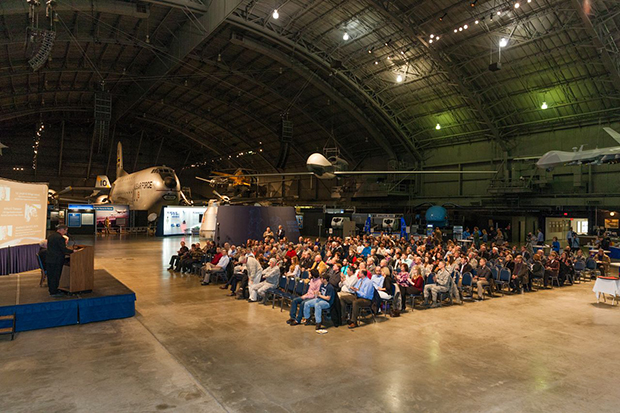
JOE KITTINGER: Colonel USAF (Retired), Mission Consultant
- Holds the records Felix Baumgartner is trying to break, including highest
freefall (102,800 ft/31,333m)
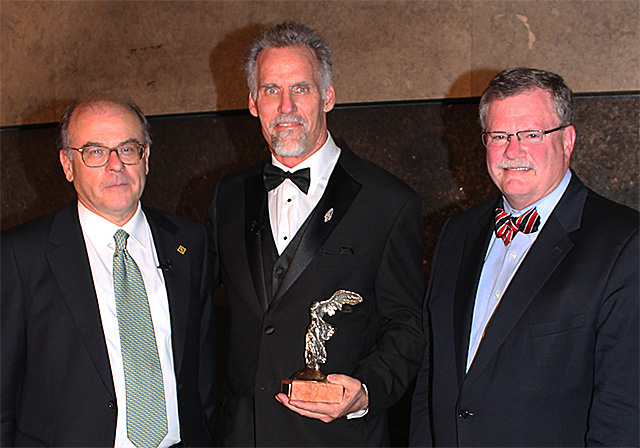
- Honored by the Smithsonian for lifetime achievement in aviation
On August 16, 1960, Joe Kittinger made history as he ascended to 102,800
feet/31,333 meters and jumped to Earth, establishing that it would be possible for
humans to survive in space. Following a distinguished USAF career, Joe set two
world ballooning records, and he has been awarded a Lifetime Achievement in
Aviation trophy from the Smithsonian National Air and Space Museum, among
many other honors. Joe shares his knowledge to help address the challenges of
Red Bull Stratos, and as “Capcom” (capsule communications) he will be Mission
Control’s primary radio contact with Felix Baumgartner during ascent.


ART THOMPSON: Technical Project Director
- Was a member of the team that conceived the B-2 “Stealth” bomber
- Vice president of Sage Cheshire Aerospace, Inc.
Art Thompson possesses more than 30 years of experience in innovating design
that has produced such major aerospace milestones as the B-2 “Stealth”
bomber. Today, Art is vice president of Sage Cheshire Aerospace, Inc., the hub
of technological activity for Red Bull Stratos. As technical project director, he has
hand-picked the mission’s extraordinary team, and he oversees and drives
engineering program management overall. Art’s Sage Cheshire team is building
the Red Bull Stratos capsule and developing numerous other vital systems on
site.


JONATHAN CLARK, MD, MPH: Medical Director
- Six-time Space Shuttle crew surgeon
- Space medicine advisor for the National Space Biomedical Research
Institute
One of the most distinguished figures in aerospace medicine, Dr. Jonathan
Clark is a six-time Space Shuttle crew surgeon who served in top roles at
Johnson Space Center. He currently teaches at Baylor College of Medicine and
the University of Texas Medical Branch. In the leadership role of Red Bull
Stratos medical director, Jon works to protect the health of Felix Baumgartner
and to establish new safety protocols for future aviators and astronauts.


MARLE HEWETT, PhD: Program Manager and Senior Flight Test Engineer

- Former chairman of the U.S. Naval Academy Aerospace Engineering
Department
- Former engineer for NASA Dryden Flight Research Center
Dr. Marle Hewett is a senior consulting engineer to the aerospace industry and
teaches for the University of Alabama, Huntsville. A retired Navy Commander,
Marle was chairman of the U.S. Naval Academy’s Aerospace Engineering
Department and subsequently was an engineer for facilities including NASA
Dryden Flight Research Center. He coordinates Red Bull Stratos operations
and directs procedures for testing and, ultimately, launch.


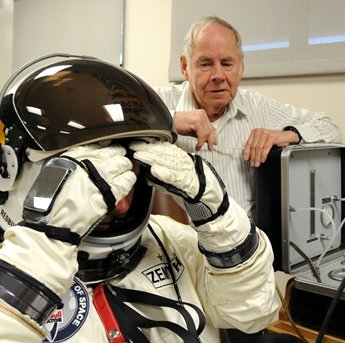
MIKE TODD: Life Support Engineer
- Nearly three decades on life support team at Lockheed’s “Skunk Works”
- Fitted pressure suits for record-setting Perlan glider project
Mike Todd worked in Lockheed’s High Altitude Life Support and Pressure Suit
Division, and he fitted pressure suits for Steve Fossett and Einar Enevoldson’s
record-breaking Perlan Project. As the Red Bull Stratos life support engineer,
Mike is responsible for the pressure suit (engineering, system design,
coordination, operation, handling, oxygen components, and fitting and field
support) and how it functions in conjunction with other mission components.


LUKE AIKINS: Skydiving Consultant

- Set three world skydiving records
- Member of Safety and Training Advisor team for U.S. Parachute Association
A professional skydiver with a history of tackling unusual aviation challenges,
Luke Aikins is one of the designated Safety and Training Advisors for the U.S.
Parachute Association. As a member of the Red Bull Stratos team, Luke designs
Felix Baumgartner’s airborne training sessions, personally launches simulation
jumps, and focuses on Felix’s chest pack, parachute and drogue chute setups.


ANDY WALSHE, PhD: High Performance Director
- Known worldwide for helping people and organizations to achieve top
performance
- Former high performance director for the U.S. Ski and Snowboard
Association
Dr. Andy Walshe helps organizations worldwide to explore human potential.
The Australian native is director of high performance for Red Bull global athlete
development and previously designed the performance program for the U.S.
Olympic ski and snowboard teams. He provides high performance support for
the entire Red Bull Stratos team, particularly Felix Baumgartner.

Share
Tweet
Posted in company, Red Bull Stratos

The team behind Red Bull Stratos – The A-Team

Feb21
2012
Written by admin

Share
Tweet
Posted in Red Bull Stratos

Chamber Testing – Final Day of Testing

Oct07
2010
Written by admin

On October 7th, 2010 the Red Bull Stratos team conducted the final
test profile during the week.  The capsule and test pilot were brought
to 120,000 feet at a maximum cooling of -60 F.  The pre-breathing
process started a 09:40.  The capsule systems ground power was removed
at 10:50 and the launch start was at 11:25.    Additional desiccant
was added to the capsule but the capsule door again exhibited
condensation during the third flight blocking the view through the
door but the onboard cameras provided full visibility of the test
pilot.  The capsule reached 123,000 feet at 14:15 with a chamber
temperature of approximately -14 F where Rob Rowe opened the dump
valve and opened the capsule door starting the egress procedures. Once
he was in position at the step of the capsule the chamber altitude was
reduce at 17,500 fpm as in the previous profile.  The flight ended at
14:45 when the chamber reached ambient pressure.  The entire flight
time was 3 hours and 20 minutes.  The power systems for the payload
were left on the capsule for additional time to represent time of
descent for the capsule.  Systems were powered down at approximately
16:45 hours with a payload battery at approximately 11 volts.

The completion of this test process at Brooks is a significant
milestone in the Red Bull Stratos project by man rating the capsule
and all systems.

IMG_3746
IMG_3747
IMG_3754


Share
Tweet
Posted in Red Bull Stratos

Testing Revealed Video

Aug26
2010
Written by admin

Share
Tweet
Posted in Red Bull Stratos

RED BULL STRATOS TEAM PROVIDES FIRST LOOK AT CAMERA SYSTEMS THAT WILL RECORD AND BROADCAST FELIX BAUMGARTNER’S MISSION TO THE WORLD

Aug25
2010
Written by admin

RED BULL STRATOS TEAM PROVIDES FIRST LOOK AT CAMERA SYSTEMS THAT WILL RECORD AND BROADCAST FELIX BAUMGARTNER’S MISSION TO THE WORLD

Team faces immense challenges to provide real-time images that will advance science and thrill public

Lancaster, Calif. – August 25, 2010 – Today the Red Bull Stratos mission team provided a first look at the custom camera systems that will record and broadcast Felix Baumgartner’s stratospheric mission in real time and high definition.

The details, announced at capsule manufacturing facility Sage Cheshire Aerospace, reveal that capturing a potentially supersonic freefall from the edge of space may be one of the most complex elements of the Red Bull Stratos mission. But with in-flight cameras mounted on both the capsule and Baumgartner’s space suit, the unique setup holds potential to provide an almost first-hand perspective of what it’s like to bail out in near space and freefall 23 miles above Earth.

When current record-holder USAF Col. (Ret.) Joe Kittinger jumped from 102,800 feet (50 years ago this month), his team used spring-wound motion picture cameras warmed by hot-water bottles to document his freefall. Red Bull Stratos will use high-definition video cameras and ultra-high-definition 4K digital cinematography cameras so powerful that the challenge will be keeping them cool in an environment where the air is too thin to wick away their prodigious heat.

Ken Arnold, the man who engineered Kittinger’s Project Excelsior camera systems, remembers those pioneering jumps vividly. “I look at the pictures quite often and the one that I’m most proud of is the one where he goes out the door,” Arnold says, citing a heart-stopping shot of Kittinger’s lone form dropping into the void. He adds, “[The cameras] showed us very definitely what happened.”

Like Arnold, Jay Nemeth, the Red Bull Stratos Director of Photography and founder of FlightLine Films, is keenly aware that the mission camera systems he has developed hold responsibility for providing research data. He notes, “The better the quality of the images, the more we give the scientists to look at later and analyze – the little nuances and details that are essential in understanding something that’s never been done: a man breaking the sound barrier with his body.”

Nemeth also acknowledges that the complexity of the Red Bull Stratos system is a “double-edged sword,” saying, “We will get much more vibrant footage, more angles, more coverage; but we also have to cover more failure modes – there is much more to go wrong.”

Capsule Camera System
The Red Bull Stratos team of world-leading production experts has equipped the capsule with nine high-definition cameras, three 4K digital cinematography cameras and three high-resolution digital still cameras. Of these, four are space-rated units attached to the exterior base of the capsule. Another eight are in pressurized housings also on the exterior of the vessel – the housings are designed to protect the sensitive cameras they contain from the near-vacuum air pressure, ice and extreme heat of the stratospheric conditions. The remaining three cameras, although positioned on the interior of the capsule, are space rated to withstand the atmospheric extremes once Baumgartner depressurizes the capsule to step out. And supporting all this is a pressurized electronics “keg” that contains approximately two miles of wiring. The ensemble capsule camera system will allow Mission Control to monitor the ascent visually for any signs of pilot decompression sickness or other safety hazards; record all activity for the benefit of future scientific research; and provide viewers of the worldwide broadcast with perspectives of the capsule, the skyscape and Baumgartner himself.

“We have basically created a flying video production studio,” says Nemeth. “The cameras are remotely controlled from a station in the Mission Control Center, where camera settings can be adjusted and different angles can be chosen for downlink to flight controllers as well as live TV broadcast and webcast viewers at home.”

Recognizing that a single image can crystallize the power of a moment, the Red Bull Stratos team has made still photography a priority as well. “There’s an iconic shot of Joe Kittinger on the cover of LIFE magazine that shows him freefalling against the background of a cloud bank about 15 miles below,” Nemeth marvels. “It was taken by an automatic camera mounted on the gondola by National Geographic, a 35 millimeter that was cutting-edge at the time – but it used film; it wasn’t digital. We’re so lucky that image survived the journey.”

Adventure sports photographer Christian Pondella, who was brought in as a consultant early in the still camera system’s development to provide input on lenses and camera mount positions, opted for still cameras with small bodies yet large resolution, and suggested a 14mm wide-angle lens to capture Baumgartner’s exit from the capsule, as well as a 64-gigabyte flash card that has a high rate of speed in addition to high capacity.  “In my mind I’ve got a vision of an image showing the capsule in one-third of the frame, with Felix dropping away and the Earth below all visible. But there’s a lot of luck involved,” Pondella says. “It’ll all come down to how the balloon and capsule happen to be positioned at that moment.”

Suit Camera System
Some of the most dynamic images will be those captured from Baumgartner’s point of view on his descent. Three small high-definition video cameras will capture three angles of his descent back to Earth. Baumgartner will activate these suit cameras himself, just before he jumps, and, like Baumgartner, they must be able to function in near-space conditions for up to 20 minutes, as well as at the extremes of supersonic speed. Furthermore, the cameras must provide useable shots regardless of Baumgartner’s orientation: Baumgartner will wear small HD video cameras with opposing views – one on each thigh – plus a camera on his chest pack that will provide a view of his helmet visor.

Luke Aikins, the Aerial Strategist for the Red Bull Stratos team, has skydived with Baumgartner on numerous test jumps, filming the descents. “We’re being careful to make sure that the suit cameras won’t affect Felix’s freefall,” Aikins reports. “After the mission is over, the team will be able to study his footage and come up with ideas to help people in future endeavors – we hope to see details like what went on with his body position, and even with the fabric, in a way that might be impossible for Felix to perceive.”

“Ultimately, from the time we seal the capsule until I set foot on Earth again, I’m going to be alone,” Baumgartner states. “But thanks to these camera systems, at least I’ll have the reassurance that the mission team should be able to monitor what’s going on visually as well as via radio, and in my mind I’ll know that people all over the world are sharing the experience with me.”

LIVE Red Bull Stratos Broadcast and Webcast
On the day of Baumgartner’s jump, Red Bull Stratos, along with web partners, will provide a LIVE television broadcast and online stream of the activities and stories surrounding his ascent and descent. The final launch date, location and live stream details will be announced in the coming weeks on www.redbullstratos.com <http://www.redbullstratos.com> , on Twitter (@RedBullStratos), and on Facebook (http://www.facebook.com/redbullstratos <http://www.facebook.com/redbullstratos> ).

Some Quick Facts on the Red Bull Stratos In-Flight Camera Systems

·        There’s approximately two miles of wiring in the pressurized “keg” that supports the Red Bull Stratos cameras.

·        The “crush pads” on the base of the Red Bull Stratos capsule are designed to absorb up to 8 Gs of impact to protect equipment including the camera systems – as well as Felix Baumgartner himself should an urgent situation require him to descend in the capsule.

·        A typical satellite uplink truck has one or two channels of microwave video. The Red Bull Stratos capsule has three.

·        With a combined total of 15 in-flight HD cameras, the Red Bull Stratos capsule and Felix Baumgartner’s pressure suit have more HD cameras than most 45-foot television production trucks.

·        Special filters are used on some of the Red Bull Stratos cameras because the brightness of the sun is more intense in the upper stratosphere.

·        The Red Bull Stratos camera housings are designed to withstand intense heat on the sunny side while sustaining temperatures far below freezing on the shadow side.

·        It is anticipated that some of the cameras inside the Red Bull Stratos capsule will be covered in ice when the vessel touches back down on Earth.

·        The microphones inside the Red Bull Stratos capsule will record sound only as long as there is air to carry the soundwaves. When Felix Baumgartner depressurizes the capsule (just before he jumps), those ambient microphones in the capsule will stop picking up sound. (This will not, however, affect the microphone in Baumgartner’s helmet.)

###


This Red Bull Stratos Moving Images main electronics cage houses High Definition RAM recorders, Camera Control Units,
Routers, 3 Video Transmitters, Telemetry Computer, and a sophisticated electrical system to power everything.
The cage resides inside a pressurized keg located  at the top of the capsule. @FlightLine Films


Still camera and POV camera placement inside the Red Bull Stratos capsule. @FlightLine Films

mime-attachment
mime-attachment[1]
mime-attachment[2]


Still cameras (Inside the pressurized Red Bull Stratos capsule. @FlightLine Films

Mission Background and Partner Information

About Red Bull Stratos
Red Bull Stratos is a mission to the edge of space. Pilot Felix Baumgartner will ascend to the stratosphere in an attempt to launch a freefall jump that would see him become the first person to break the speed of sound with the human body. The data captured by this mission and its team of world-leading scientists promises new standards in aerospace safety, expanding the boundaries of human flight.

About FlightLine Films
Since 1984, Las Vegas–based FlightLine Films has been providing television and motion-picture producers with the highest quality in aerospace cinematography services. The company has pioneered visual documentation systems for the private and commercial space programs advancing into the 21st century. FlightLine offers zero-gravity qualified crews and HD cameras for use in the cold vacuum of space, as well as housings that allow traditional motion picture cameras to operate in that hostile environment. FlightLine Films is designing and building the camera systems to document the Red Bull Stratos mission from multiple perspectives, including ground-based trackers, an airborne tracking system, in the capsule and on Baumgartner’s pressure suit. For more information, please visit: www.flightlinefilms.com <www.flightlinefilms.com> .

Red Bull Stratos is proud to share this mission with the following partners:

Nokia
As the official global mobile partner, Nokia has developed the Red Bull Stratos application to monitor this groundbreaking project. Available exclusively through Ovi Store by Nokia, users can learn more about the mission’s progress by reading articles and watching videos from the Red Bull Stratos team of experts. Nokia users can also follow the countdown, stream the final jump in real time and watch Felix Baumgartner’s pulse race by monitoring his biometrical data before, during and after the jump. Once complete, the app will deliver unique content about the Red Bull Stratos mission direct to handset. For more information, please visit http://www.ovi.com <http://www.ovi.com> .

Microsoft
Microsoft is the global media technology partner for Red Bull Stratos. Microsoft’s Silverlight and IIS Smooth Streaming technology bring an interactive live experience in High Definition to web viewers worldwide. To learn more, visit http://www.microsoft.com/silverlight <http://www.microsoft.com/silverlight> .

Riedel Communications
Riedel Communications – renowned for its pioneering advanced fiber, intercom and radio technology – provides the entire communications solution for this outstanding project, integrating both wireless and wired digital intercom systems. Additionally, Riedel furnishes the fiber-based video and signal distribution as well as the wireless video links to the capsule’s onboard cameras – enabling stunning pictures to be delivered from the Red Bull Stratos capsule. Please visit http://www.riedel.net <http://www.riedel.net/> .

Notes to Editors

BBC Documentary
An exclusive, all-access documentary about the Red Bull Stratos project is being produced by the BBC together with National Geographic. A few weeks after the jump in 2010, the feature-length film will premiere on BBC2 in the UK and National Geographic Channel in the US. It will be aired across the rest of the world soon after. The 90-minute documentary about Red Bull Stratos is being globally licensed and distributed to broadcasters by BBC Worldwide.

Broadcasters interested in the BBC documentary should visit www.bbcworldwide.com <http://www.bbcworldwide.com>  for more details.

About Sage Cheshire Aerospace
Sage Cheshire Aerospace, Inc., offers the best services of leading technical minds in research, advanced composite design, engineering and fabrication to find solutions for a full spectrum of aerospace needs. Sage Cheshire is designing, building and testing the Red Bull Stratos pressurized capsule. The company also coordinates other vital aspects of the mission, from creating computer fluid dynamics to selecting crews and interfacing with outside agencies. For more information, please visit: www.sagecheshire.com <www.sagecheshire.com> .

For hi-res images, B-roll, web videos and additional press materials throughout the project, please visit: www.redbullstratos.com/newsroom <http://www.redbullstratos.com/newsroom> .

Red Bull Stratos content, as well as other Red Bull productions, can also be accessed at: www.redbullcontentpool.com <http://www.redbullcontentpool.com> .

Share
Tweet
Posted in Press & Media

Felix Baumgartner with Neil Armstrong & other Space Pioneers

Aug06
2010
Written by admin
Talk im Hangar 7, Neil Armstrong


ON NEIL ARMSTRONG’S 80th BIRTHDAY, FELIX BAUMGARTNER JOINS ASTRONAUT FOR RARE TELEVISION INTERVIEW
Panel of legendary space explorers offers encouragement to Red Bull Stratos Pilot as he prepares to become the first to break the speed of sound in freefall.

Salzburg, Austria – August 6, 2010 – On Thursday, August 5, a historic television broadcast on ServusTV documented the meeting of Red Bull Stratos Pilot Felix Baumgartner with aerospace legend Neil Armstrong, the American who was the first man to walk on the moon. The appearance was one of Armstrong’s first television interviews in four decades and coincided with the date of his 80th birthday.

Also joining the conversation were pioneering aviators Alexei Leonov, the Russian who was the first to man to walk in space, and Thomas Reiter, who took part in the European Space Agency’s longest manned space mission and was the first German to conduct a space walk. The groundbreaking legends of aerospace offered encouragement to Baumgartner as he prepares to attempt an aerospace breakthrough of his own: to become the first person to break the speed of sound in freefall.

In acknowledging Baumgartner, Leonov, and Reiter, Armstrong noted, “I find it interesting that we have four fliers here, all of which are better known for getting out of something than for flying it… We can’t all stay inside flying machines!”

It’s a point that’s well taken by Baumgartner, because a primary objective of his Red Bull Stratos freefall attempt from 120,000 feet above Earth is to provide data and protocols that may help to pave the way for high-altitude bailout, particularly in capturing new research information by attaining supersonic speeds.

On that subject, Armstrong commented, “Before the middle of the 1940s many distinguished engineers believed it was not possible to go supersonic. They thought the craft would disintegrate, which was complete nonsense.”

He continued, “I think a human can go supersonic; I believe that’s true. There are possible difficulties. I’m not sure they’ll exhibit themselves until you are fast enough, or in dense enough air that you start to create shockwaves. And when shockwaves influence your ability to stabilize yourself, that’s a difficult area to predict. But I think it’s possible.”

After the program, Baumgartner said, “This has been an honor. These men are heroes in every sense of the word, and to hear their stories and receive their encouragement firsthand is inspiring. I’m determined that our Red Bull Stratos mission will honor their legacy by making new contributions.”

Share
Tweet
Posted in Press & Media

Les Echos – July 2010

Jul29
2010
Written by admin

Share
Tweet
Posted in Press & Media, Red Bull Stratos

HIM Chinese Article – July 2010

Jul29
2010
Written by admin
him_july_18
him_july_19
him_july_20


Share
Tweet
Posted in Press & Media, Red Bull Stratos

Men’s Journal Article on Red Bull Stratos – August 2010

Jul22
2010
Written by admin
Men_s Journal August 2010-email_Page_1

Share
Tweet
Posted in Press & Media, Red Bull Stratos

Popular Mechanics Cover Page – Red Bull Stratos

Jul14
2010
Written by admin
Popular Mechanics Cover: Red Bull Stratos

Share
Tweet
Posted in Press & Media - Tagged Breaking Speed of Sound, cover page, july, popular mechanics, popular mechanics magazine cover, red bull stratos, red bull stratos press, Sage Cheshire Aerospace, space dive, space jump, stratos
← Older Entries Newer Entries →

Project Links

  • Red Bull Stratos
  • Sage Cheshire Site

Categories

  • company
  • International Media
  • Press & Media
  • Projects
  • Red Bull Stratos
  • Uncategorized


May 2012
M T W T F S S
« Mar    
 123456
78910111213
14151617181920
21222324252627
28293031  

Archives

  • May 2012
  • March 2012
  • February 2012
  • October 2010
  • August 2010
  • July 2010
  • May 2010
  • April 2010
  • March 2010
  • February 2010
  • January 2010

Tags

aerospace Breaking Speed of Sound breaking the speed of sound composites design Discovery Article Discovery News engineering Fall from Space felix baumgartner Fox Article Fox News Free fall from edge of space Jump from Space longest free fall mission to the edge of space mission yo the edge of space new york times ny times article PopSci Popular Science Popular Science Article Recent News Stratos Red Bull Science team red bull stratos Red Bull Stratos Article Red Bull Stratos Prime Contractor Red Bull Stratos Team Red Bul Statos Development sage cheshire Sage Cheshire Aerospace space dive space jump Space Skydiver stratocat stratos Stratos Engineering stratos jump stratospheric jump Stratos Science Stratos Science Team Stratos Team Supersonic Freefall Supersonic Jump Supersonic Speeds

Meta

  • Log in
  • Entries RSS
  • Comments RSS
  • WordPress.org

EvoLve theme by Theme4Press  •  Powered by WordPress Sage Cheshire News